
1.3 Bugs - Hemiptera
1.3 Bugs - Hemiptera
1.3.1 Sunn pest - Eurygaster integriceps Put. (Hemiptera, Scutelleridae)
The bug measures 10-13 mm in length and 6.8-8.8 mm in width, being broadly oval and convex (Figure 8). The colouration of the insect varies from sandy yellow to black, often in a uniform shade or with irregular patterns; the scutellum, which has straight sides, covers most of the abdomen.
The egg measures approximately 1 to 1.1 mm in diameter, is round, and starts off green. As it matures, its colour changes, displaying distinct patterns (Figure 9). The colour development follows this sequence: on days 2-3, the egg becomes covered with small brown specks; on days 3-4, the green hue reappears, with a dark spot emerging at the center of the lid; by days 5-6, an orange pattern resembling an anchor begins to form; over the next 6-8 days, the anchor pattern sharpens, and a black triangular mark (referred to as the egg tooth) appears above it; finally, by days 7-9, the egg turns pink (Paikin, 1969).
The larvae progress through five instars (Figure 10): the first instar is roughly 1.5 mm long and 1.3 mm wide, almost round, highly convex (Figure 11), and light pink, eventually darkening to brown; the second instar ranges from 2 to 2.3 mm in length and 1.6 mm in width, slightly oval, light yellowish-grey, with darker markings on the head, pronotum, and middle abdominal segments; the third instar measures between 3.3 and 4.5 mm in length and 2.4 to 2.7 mm in width, with an oval shape, light yellowish-grey colour, and a darker head and abdominal segments; the fourth instar is 5.2 to 6.1 mm long and 3.8 to 4.5 mm wide, retaining the same light yellowish-grey colour and showing visible rudiments of the forewings as small protrusions on the mesonotum; the fifth instar reaches 8 to 10 mm in length and 6 to 6.7 mm in width, light brownish-grey with three lobed projections along the hind edge of the pronotum.
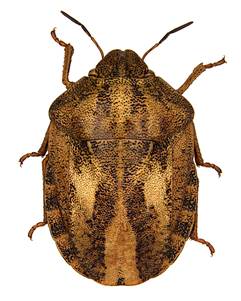
Figure 8 - Sunn pest - Eurygaster integriceps Put.
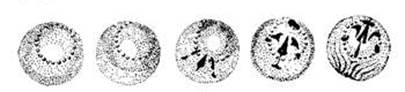
Figure 9 - Colouration of the eggs of the sunn pest - Eurygaster integriceps Put. (according to Grivanov).
Distribution. This species is found across the CIS, primarily in the steppe and forest-steppe areas of the European region, including the Crimean Peninsula and the Caucasus, and also in Central Asia, Central Europe, the Middle East, and northern Africa.
The bugs overwinter in the forest litter of forest belts and woodlands, with some species migrating. They inhabit mountainous areas, reaching elevations of up to 2000 meters. Once spring temperatures rise above 12°C, they migrate toward cereal crops, which provide their primary nourishment. Females lay their eggs on the leaves of cereal plants, typically arranged in two rows, with each row containing 14 eggs. A single female can lay more than 300 eggs in total (Areshnikov, Starostin, 1992). The incubation period lasts between 9 and 16 days.
The first instar larvae initially remain grouped together (Figure 11), but after 3-4 days, they start to spread across the plant. Over the course of 35-40 days, the larvae develop by feeding on the sap of stems, leaves, and grains. The emergence of adults coincides with the completion of the milk or full ripeness stages of the crop. If the larvae have not fully matured before harvest or if new adults appear, they may feed on fallen ears and grains on the ground (V.G. Puchkov, 1987). This species completes a single generation per year.
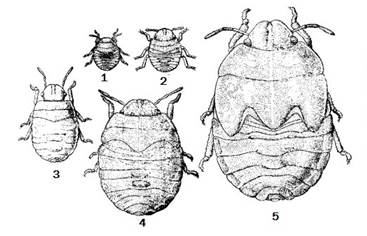
1 - first; 2 - second; 3 - third; 4 - fourth; 5 - fifth
Figure 10 - Larvae of the sunn pest Eurygaster integriceps Put. of different ages (according to Arnoldi)
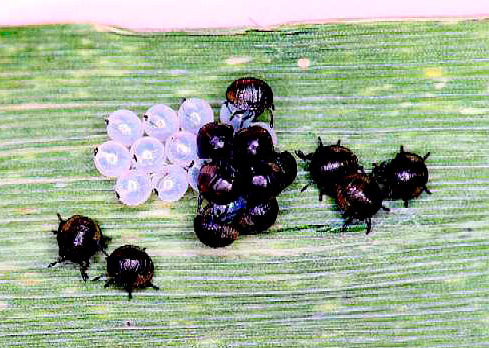
Figure 11 - Newly emerged larvae of the sunn pest sunn pest on a wheat leaf
Harmfulness. Damage during the tillering stage is typically slight, often manifesting as wilting of a few leaves or parts of the plant. During the stem elongation phase and before heading, damage usually appears as yellowing of the upper leaves or full white ear syndrome. At heading, the damage can result in either complete or partial white ear syndrome. There are also reports suggesting that the damage caused by these insects may slow down the growth of cereal crops
In the grain-filling stage, the grains tend to look shriveled. During the milk ripeness phase, although the shape of the grains is less affected, visible surface dents can be observed (Figure 12). In the wax ripeness phase, the grains wrinkle, and a yellowish spot forms on the surface (Figure 12).
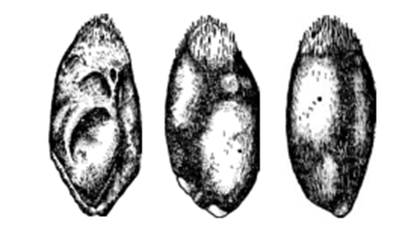
1 - milk ripeness; 2 - wax ripeness; 3 - full ripeness
Figure 12 - Grain of spring wheat damaged by larvae of the sunn pest in various phases (according to Sozinov and Zhemela)
At full ripeness, the damage becomes more noticeable, characterised by a distinct yellow spot (Figure 12). The insects and their larvae introduce enzymes into the grains through their feeding punctures, which causes the gluten to break down, impairing its baking quality and reducing the grain’s ability to sprout (Sozinov, Zhemela, 1983). This leads to a decline in the grain’s suitability for planting. A tiny dark spot often remains where the insect pierced the grain, marking the point of entry.
1.3.2 Sharp-headed shield bug - Aelia acuminata (L.) (Hemiptera, Scutelleridae)
The bug measures 7-10 mm in length and 3.2-4.5 mm in width. The body of the insect is characterised by a wedge-like shape in the front third and a broader, oval-shaped rear. Its scutellum is triangular, narrowing toward the back and partially covering the abdomen. The overall colouration varies from sandy yellow to a brownish-yellow hue, appearing either uniform or with irregular patterning. Prominent dark longitudinal stripes often run along both sides of the head, pronotum, and scutellum, flanking the central line (Figure 13).
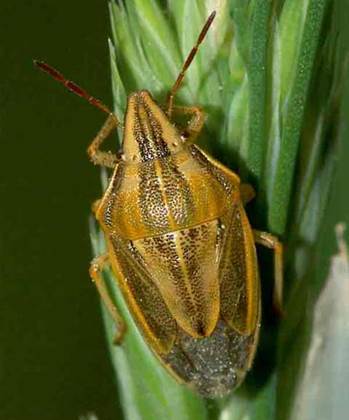
Figure 13 - Sharp-headed shield bug - Aelia acuminata L.
Eggs are oval in form, measuring approximately 0.9 to 0.95 mm in length, and are typically pale green or yellow in colour. A typical clutch consists of 12 eggs aligned in two vertical rows.
The nymph, which closely resembles the adult form (imago-like), undergoes five developmental stages or instars.
Distribution. This species is widespread across various ecological zones of the CIS, including forest, forest-steppe, and steppe areas of European Russia, the Caucasus, the Crimean Peninsula, and Central Asia. Its range extends eastward into Siberia up to Lake Baikal, and it is also found in Central Europe, the Middle East, and northern Africa.
These bugs overwinter beneath forest debris in wooded areas, forest belts, and similar habitats. Their life cycle is largely comparable to that of the sunn pest. While clutches generally consist of 12 eggs, some may contain six, typically laid in two neat rows.
The eggs hatch in 6 to 8 days, and the larval stage spans roughly 45 to 60 days. Usually, only one generation is produced per year, though a second generation can occur in warmer southern regions of the species' distribution (Bei-Bienko et al., 1972).
Harmfulness. The type and extent of damage caused by this species closely resemble that associated with the sunn pest, affecting both crop yield and grain quality.
1.3.3 Rice leaf bug - Trigonotylus coelestialium Kirk.
The insect has a narrow, elongated body, measuring between 5.7 and 6.5 mm in length, with colouration ranging from light green to a yellowish-white. Its head is tapered and dull in appearance, greenish-yellow in tone, and features small brown eyes. The antennae are located in front of the eyes and are slightly shorter than the body length. They, as well as the head and limbs, sometimes have a reddish tint. The first segment of the antennae is at least partially greenish (Figure 14).
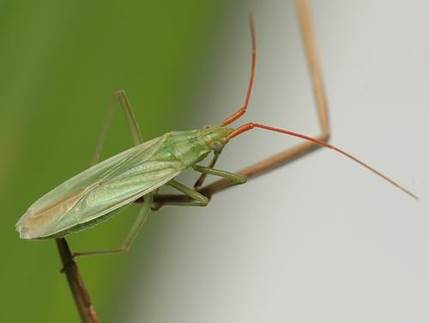
Figure 14 - Rice leaf bug - Trigonotylus coelestialium Kirk.
The larvae are green, covered with light fluff and individual dark hairs.
Distribution. The range covers almost all of the Palaearctic region. In Russia, it is widespread except for the Far North and Kazakhstan.
Eggs laid by females in autumn on winter crops and various cereal weeds usually winter; they are often found in leaf sheaths. The eggs are pale green and about 1 mm long.
Up to three generations typically emerge each year, with a fourth occurring in some regions of Central Asia. The first generation of larvae develops on overwintered cereal crops and various wild grasses, including wild oats, wheatgrass, couch grass, ryegrass, barnyard grass, and switchgrass. Their development begins in April, with adults appearing by late April or early May. These adults then move to rice fields or other spring cereals such as spring wheat, oats, barley, and millet, where the second generation takes shape. In June and July, the egg stage lasts around 10 days, while the larval phase continues for 20 to 26 days. By early August, adults of the third generation primarily relocate to irrigated crops, grass pastures, volunteer cereals, and cereal fields sown in summer and autumn. From late May through late October, overlapping generations result in a continuous presence of all life stages of the rice leaf bug on host plants, without clearly defined generational boundaries.
Harmfulness. Pest of agricultural crops. It damages the generative organs (flowers, pistil filaments, forming grains) of almost all cultivated cereals. The nature of the damage is typical for bugs - sap-sucking in stems, leaves, and inflorescences. As a result of the damage, the upper half of the leaf turns yellow and dries out, and young plants lag in growth. It often reproduces in large numbers and can significantly reduce grain yield, especially of spring wheat, foxtail millet, millet, forage grasses, and corn. It is capable of transmitting corn cob bacteriosis and conidia of powdery mildew of cereals.