
1.9 Mites – Acarina
1.9.1 Wheat mite — Siteroptes cerealium Kirch. (Pediculoides graminium Reuter) (Siteroptidae)
The immature female, undetectable without magnification, reaches a length of up to 300 micrometers and possesses a slender, elongated-oval body shape. As the eggs mature within her, the female's body undergoes significant enlargement - expanding nearly 500-fold - and adopts a more rounded or spherical form (Figure 47). The propodosoma is equipped with three dorsal and five ventral pairs of simple setae, while the hysterosoma bears six pairs dorsally and four ventrally; notably, poststernal setae are absent.
Females overwinter beneath plant debris and on various cereal hosts near the soil surface. They become active when temperatures rise to around 13-15 °C. Feeding primarily on stems and leaves, they later concentrate in the axils of the upper (flag) leaves as the host plant matures. During this phase, females increase in size and commence oviposition. Shortly after egg deposition, larvae hatch and rapidly develop, completing metamorphosis and reaching maturity within 3 to 6 days. As development concludes, the abdominal cuticle splits open, allowing the mature form to emerge (Velikan’ et al., 1980).
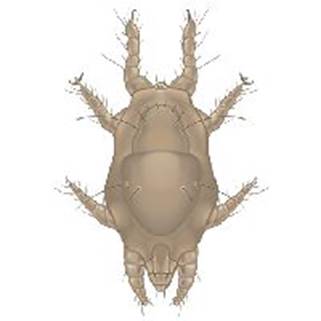
Figure 47 - Wheat mite - Siteroptes cerealium Kirch.
Harmfulness. This species infests a range of cereal crops, including barley, wheat, rye, oats, and perennial grasses. In addition to feeding on plant tissues, it also consumes fungal material. Infestation can lead to a reduction in productive tillering by as much as 20% (Belyaev, 1974). Damage symptoms include wilting of the central leaf or entire shoot, and in some instances, the stem may exhibit spiral deformation above the upper node, ultimately resulting in the appearance of "white ear disease". Furthermore, the species acts as an efficient vector for the spores of Fusarium poae (Velikan’ et al., 1980). In severe cases, productive tillering in spring wheat may be reduced by up to 50%, while oat crops may suffer damage rates as high as 93% (Belyaev, 1954).