
2.4 Lepidopterans - Lepidoptera
2.4.1 Diamond-spot pearl - Loxostege sticticalis
The wingspan of males reaches 18-20 mm, while females reach 20-26 mm. The forewings are coloured in greyish-brown tones with brown spots and a yellowish stripe along their outer edge. The hindwings are grey. There is pronounced sexual dimorphism: males are smaller than females. Males have serrated antennae, while females have thread-like ones (Figure 56).
The adult stage of the butterfly typically survives for a period of 4 to 20 days. These butterflies are primarily active during the evening hours. Their flight activity varies based on the geographical location, with flight periods often extending over time. The insects from the generation that survives the winter generally appear and begin flying during May and June. The first generation becomes active from June to July, while the second generation takes flight between July and August. The third and fourth generations are typically seen flying during the months of August and September.
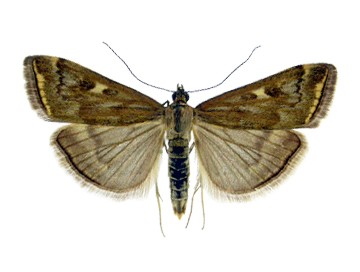
Figure 56 - Diamond-spot pearl - Loxostege sticticalis
Distribution. This species can be found across Europe, Asia, and North America.
Following mating, the female deposits between 30 and 300 eggs (up to 600 maximum). Eggs are deposited on the abaxial surfaces of host plant leaves, typically in clusters of 2-3, rarely singly. The egg stage lasts 2-15 days. Larvae reach 35 mm in length by the final instar. Their colouration is highly variable, ranging from light green to grey-green, occasionally nearly black, with dark longitudinal stripes dorsally and laterally. The head is black with a pale pattern. The larval stage lasts 10-30 days; early instars feed sheltered under silken webs, while older larvae feed openly, defoliating leaves and occasionally stems. Pupation occurs in soil cocoons, where larvae overwinter. The pupal stage lasts 7-38 days, with pupae varying from light yellow to dark brown.
Harmfulness. This species is regarded as a highly adaptable pest, posing a serious threat during periods of population surges and widespread reproduction, which typically occur every 10 to 12 years. These outbreaks can lead to considerable damage. It infests barley, wheat, sorghum, and potato, and can colonise over 200 wild and weed plant species, which serve as reservoirs during population declines.
2.4.2 Gamma moth - Phytometra gamma L.
The butterfly has a wingspan of 40-48 mm. The colouration of the forewings varies from grey to violet-brown. The wings have a shiny, silvery mark that looks like the Greek letter gamma. The transverse lines appear in pairs, with the space between them being darker. There are round and kidney-shaped spots, each framed by a narrow, shiny edge. The hindwings are grey with a brownish border. The back has a tuft of hair (Figure 57).
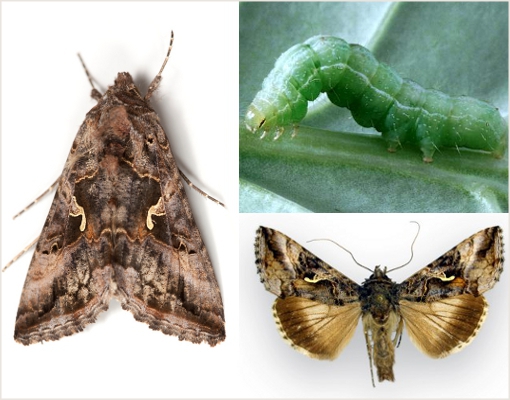
Figure 57 - Gamma moth - Phytometra gamma L.
The egg is watery white, with a diameter of 0.5-0.6 mm, and is spherical.
The caterpillar, in its larval form, measures between 24 and 40 mm in length. Its body is primarily green, with a faint pattern and two curved white lines running along its back. The spiracles are yellow, outlined in black, and situated on a pale yellow stripe. The head has a black colouration on the sides, and the caterpillar has three pairs of legs along its abdomen, which sets it apart from other moth larvae. Interestingly, it does not have legs on the third and fourth abdominal segments. In total, the insect has 12 legs, and when it moves, it arches its body in a distinctive way.
The pupa is dark brown and ranges in size from 17 to 20 mm in length. Its cremaster is cone-shaped, featuring two large hooks and six smaller ones. Small hooks are arranged in pairs on the dorsal side and laterally to the large hooks.
Distribution: The gamma moth is widespread throughout the European part of Russia, in the Caucasus, Central Asia, Kazakhstan, Western Siberia, and the Far East.
The duration of development for one generation is 25-45 days.
Harmfulness: The Gamma moth ranks among the most destructive pests of cultivated plants. The larvae cause the primary damage, with documented infestations affecting 100 plant species across 23 families. Recurrent outbreak cycles occur, characterised by epidemic population surges followed by abrupt declines.