
4.9 Helminthosporium (common type) and Helminthosporium-Fusarium root rot
The causative agents of the disease are Bipolaris sorokiniana Sacc. (Helminthosporium sativum P. K. et B.) and species of the genus Fusarium Link.
The disease appears on both the primary and secondary root systems, as well as on the epicotyl, subterranean internodes, and the lower portions of the wheat stem. It is typically characterised by the presence of brown to dark brown streaks, blotches, or broad bands (Figure 72). In advanced stages of infection, entire internodes - usually one or two - may become completely discoloured, often resulting in the collapse and death of the side shoots. When infected tissues are placed in a moist environment, they develop a dense, dark olive-green, velvety growth composed of fungal mycelium along with conidiophores and conidia. The conidiophores are bent, knobby, and serrated, with 5-8 septa; conidia are olive, dark olive, straight, or less often curved, club-shaped, inversely egg-shaped, with 2-7 septa.
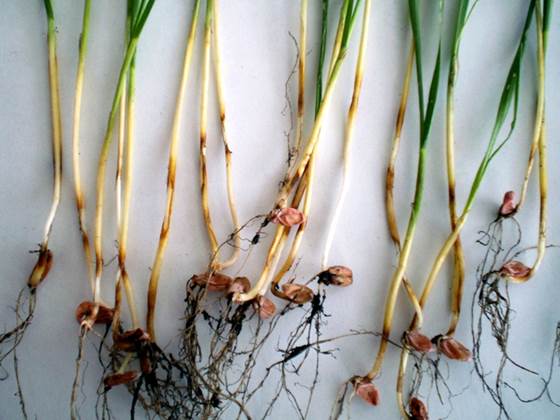
Figure 72 - Helminthosporium (common type) and Helminthosporium-Fusarium root rots
sativum is a fungus with a high degree of specialisation, capable of infecting more than 90 different grass species, including staple crops like wheat, barley, rye, and oats, as well as a variety of wild grasses such as couch grass and fescue. Additionally, the pathogen has been found in some dicot species, including field bindweed, rosy sow thistle, bitter wormwood, and white goosefoot. However, under natural conditions, its host range appears to be relatively restricted. Research findings indicate that certain plants, such as oats, wild oats, rye, millet, sorghum, and corn, exhibit significant resistance to this pathogen. The fungus requires the presence of liquid moisture for growth and can develop within a temperature range of 3-5°C to 35-40°C, with the most favorable conditions being between 20 and 27°C. Controlled laboratory studies using pure fungal cultures have demonstrated that the most optimal temperature for its development is within 20-30 °C.
The causative agents of root rot in winter and spring wheat can also be fungi from the genus Fusarium, specifically F. avenaceum Sacc., F. gibbosum App. et Wr., F. graminearum Schw., and F. oxysporum Snyd. et Xans.
In fusarium root rot, infected roots and underground internodes of the stem are covered with a cottony white, yellowish, or pink sporulation of the fungus. Macroconidia are sickle-shaped with 2-3 to 5-7 septa, while microconidia are unicellular, oval or pear-shaped.
Sources of infection. The pathogens responsible for root rot typically remain viable on decaying plant material and in the soil, with occasional transmission through seeds. When no susceptible host plants are present, the fungus can endure in the soil in a dormant form, such as diaspores.
In Northern Kazakhstan, the principal sources of infection are the remains of wheat crops and wild grasses left after harvest. Conidia of Helminthosporium have been detected in 20 to 69% of cases, whereas species of Fusarium are found in 3.3 to 23.3% of instances (Dzhiyembaev, Alzhanov, 1970). Root rot can also be carried by wheat seeds, with the occurrence of the disease in seedlings varying from 14% to 56%, leading to a decrease in their germination (Shevchenko, 1970).
Damage to the plant root system disrupts the interaction between the aerial and subterranean parts, which in turn hampers the transport of water and nutrients. The consequences of this disruption are most evident in the seedling phase, where a reduction in wheat seed germination rates and slower growth are observed. As a result, plants affected by this condition fall noticeably behind healthy ones (Chulkina, 1975). Investigations have indicated that root rot alters key physiological and biochemical processes and detrimentally affects the quality of the harvested grain. In 1 gram of completely dry material from healthy plants, the overall nitrogen concentration was 3.1%, protein - 15.3%, soluble carbohydrates - 5.1%, starch - 48.9%; while in affected plants these values were 2.84%, 13.8%, 4.7%, and 40.1%, respectively (Dzhiyembaev, 1971).
The impact of root rot can vary considerably based on factors such as the specific wheat variety, the plant organ affected, the stage of disease progression, the crops grown previously, and prevailing environmental conditions.