
3.4 Stem rust (linear or black)
The pathogen responsible for the disease is the fungus Puccinia graminis Pers. (P. graminis f. sp. tritici).
Primarily, stems are affected, while leaves and glumes are less frequently affected, where large orange pustules appear in linear formations on the plant. Teliospores endure through the winter on the remnants of plants left after harvest. In the spring, they begin to germinate, giving rise to basidia and basidiospores. These spores subsequently infect the leaves and berries of barberry, leading to the formation of spherical spermogonia, which contain spermatia. Once these cells fuse, cup-shaped aecia develop from various spermogonia, housing colourless, spherical aeciospores. The wind disperses these aeciospores, facilitating the spread of the infection to both wild and cultivated cereals: large orange or brick-red uredinia pustules are formed on stem internodes, less frequently on leaf blades, arranged in linear rows (Figure 63). Urediniospores are elongated with a rough, spiny texture. They appear yellow-brown, oval in shape, and range from 21 to 35 by 12 to 20 micrometers in size. Toward the end of the wheat-growing period, the pustules darken to a nearly black, glossy appearance, marking the shift to the telial stage of the fungus. Teliospores consist of two cells, having a spindle or club-like form with a smooth surface and a heavily thickened, dark brown tip, measuring between 27 and 77 by 13 to 22 micrometers (Figure 64).
The viability of urediniospores depends on conditions after harvest. During dry autumns and moderate winters, the pathogen can persist and remain active until June. However, the occurrence of frequent rainfall in October and November, coupled with warm daytime temperatures, proves to be unfavorable for its survival.
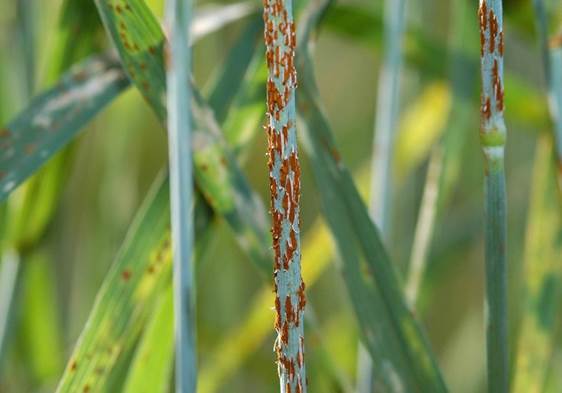
Figure 63 - Stem rust (linear or black) of wheat
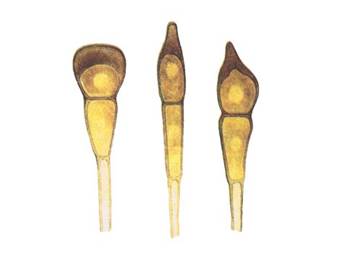
Figure 64 - Teliospores of the fungus Puccinia graminis Pers.