
3.7 Septoria leaf blotch
The main causative agents of these diseases are Stagonospora (Septoria) nodorum Berk. and Septoria tritici (Rob. et Desm.).
In Kazakhstan, five fungi from the genus Septoria have been registered on wheat: S. tritici Rob. et Desm., S. nodorum Berk., S. gramineum Desm., S. didickeana Bayd. et Picb., S. triticiana. Among the species from the genus Septoria described as wheat pathogens, S. nodorum and S. tritici dominate. The first species is widely distributed in Northeast Kazakhstan.
nodorum is capable of infecting a wide range of wheat plant tissues, including leaves, sheaths, stem segments, glumes, and even the developing grain. Symptoms on leaves typically begin as indistinct brown blotches, often located near the tips or along the margins, which may expand and merge, eventually causing premature leaf deterioration (Figure 69). In some cases, particularly when wheat is cultivated repeatedly on the same land, unusual forms of the disease may appear - such as yellowing or necrotic lesions - potentially linked to the diversity of pathogen strains present. Infection is not limited to foliage; stem internodes can also show signs of disease during the grain maturation phase, where discoloured, faint spots become evident. During years with high humidity, glumes may display brownish, oval lesions with a purplish edge, often concentrated at the base, which facilitates seed contamination (Figure 70). In the arid climate zones of Kazakhstan, the fungus typically forms pycnidia during the cooler autumn and early spring months. These reproductive structures develop beneath the surface layer of infected tissues and appear as dark, spherical or oval bodies, measuring between 40 and 250 micrometers in diameter, often featuring a small rounded pore for spore release. Pycnidiospores are straight or slightly curved with 1-3 septa, measuring 18-33 × 2-4 micrometers. The sexual stage of the septoria pathogens Leptosphaeria nodorum Mull. and L. tritici Mull. is known to develop under unfavorable conditions for the pathogen, significantly increasing the inoculum potential (Byzova et al., 1971).
The dispersal of pycnidiospores produced by Septoria pathogens occurs primarily through rain splash. Once free moisture is present, these spores are capable of germinating across a broad temperature spectrum, ranging from 5°C to 35°C, with the most favorable conditions for S. nodorum falling between 15°C and 20°C. Simulated rainfall studies demonstrated that droplets as small as 600 micrometers in diameter can carry over a hundred spores of the fungus (Pyzhikova & Sanina, 1987). The longevity of these spores varies depending on environmental conditions. In crop residues, they can remain viable for a period ranging from six months to a year and a half, while in the surface soil layer, their survival typically extends from 30 to 50 days. However, under conditions of high soil moisture and active saprophytic microbial communities, viability declines rapidly, often within two to three weeks in the cultivated soil layer (Vasetskaya & Chigirev, 1987).
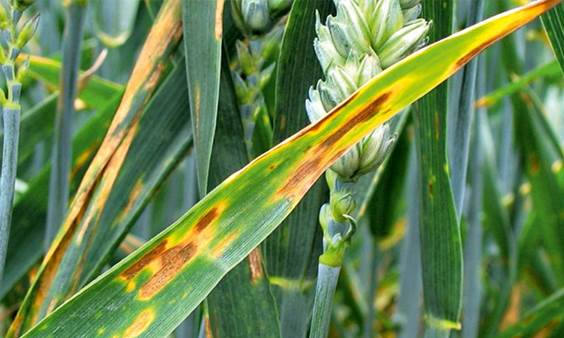
Figure 69 - Wheat leaves affected by septoria
Wheat is susceptible to infection by S. nodorum and S. tritici under a wide temperature range, spanning from 5°C to 35°C, with the most favorable conditions typically occurring between 20°C and 30°C. These fungi differ in how long they require leaf surfaces to remain wet: S. nodorum can initiate infection after just 4-5 hours of moisture, while S. tritici generally needs prolonged wetness of 8-10 hours. Extended leaf wetness caused by dew or rain significantly increases infection efficiency. For example, leaf colonisation may occur within 36-48 hours at cooler temperatures (10-15°C) and within 24-36 hours when temperatures rise to 20-25°C. In more variable field conditions - where dry and wet periods alternate - pathogen entry into the plant is still possible, though symptom development tends to be less severe. Interestingly, studies have shown that septoria spores can persist on dry foliage for up to 10 hours and remain capable of infecting plants once favorable environmental conditions return (Pyzhikova and Sanina, 1987).
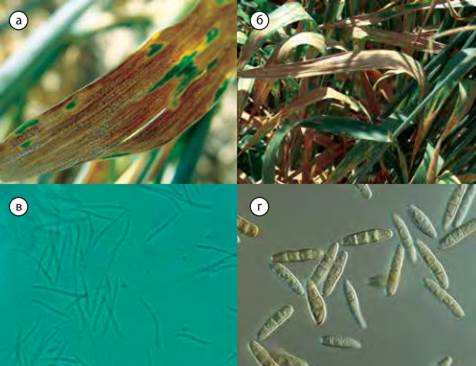
Figure 70 - S. tritici and S. nodorum pathogens
Extensive research conducted over many years has demonstrated that Septoria pathogens can survive on wheat stubble in the northern and other regions of Kazakhstan. For S. nodorum, the production of pycnidia and spores generally occurs during the cooler seasons - autumn through spring - though in particularly wet summers, these structures can also develop on infected leaves and glume tissues. On post-harvest plant debris, pycnospore development is not uniform; a single fragment of straw may simultaneously host mature pycnidia and spores still in the early stages of formation. Remarkably, up to 300-400 pycnidia of S. tritici can form on just one square centimeter of leaf or stem internode surface, highlighting the pathogen’s substantial capacity for infection.
Controlled laboratory studies further reveal contrasting germination behaviors between the two species. Spores of S. nodorum initiate germination rapidly, even under relatively cool conditions. At temperatures between 12°C and 15°C, 20-27% of the spores germinated within 1-2 hours, reaching 64% after just 3 hours. In contrast, S. tritici spores exhibited significantly slower germination; only 6.3% germinated after 12 hours at 15°C, and 13.2% at 20°C - while at the same temperature range, S. nodorum spores achieved near-complete germination (90-100%).