
5.2 Phytosanitary condition of soil in spring wheat agrocenoses
In the agroecosystems of Northeast Kazakhstan, over 62% of arable land is inhabited by pathogens of fusarium-helminthosporium diseases caused by fungi of the Fusarium genus and Bipolaris sorokiniana, which results in spring wheat cultivation occurring annually under infectious conditions, adversely affecting the phytosanitary condition of crops [44–47].
Soil analysis for the presence of conidia of the pathogen causing root rot was determined using the appropriate flotation method.
Analysis of soil samples taken from different regions of the Pavlodar district, depending on the previous crop, showed that the frequency of occurrence of the fungi named Bipolaris sorokiniana reached the economic threshold in each year of the study, dominating in the months of July to August (Figure 26). Field and laboratory experiments showed that crop rotation played an important role in the development and spread of root rot. The rotation of susceptible crops in sowing helps to suppress the accumulation of infection in the soil.
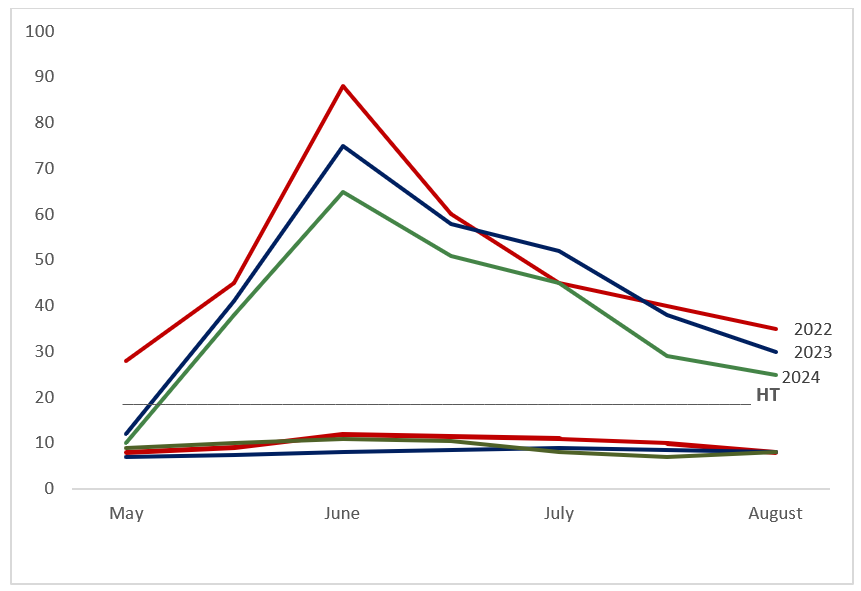
Figure 26 - Dynamics of the Bipolaris sorokiniana population in the soil of agro- and natural phytocenoses
According to the classification of soils based on the colonization by the causal agent of helminthosporium blight, it was determined that all studied soils were colonized by the pathogen above the harmfulness threshold, but the indicators varied by district and preceding crops depending on the agronomic practices applied. As a result of the study, a large portion of conidia were found to be in a degraded or inactive state. Based on this, the phytosanitary condition of the crops is determined as the manifestation of the probability of infection of plant residues, with a disease development index exceeding 30%. Due to the isolated and confined conditions of pathogen spread and the moderate level of infection, grain yield reduction is not critical.
It was determined that the alternation of cereal crops in crop rotation over several years creates favourable conditions for the development of root rot pathogens. Therefore, to minimize the spread of plant diseases, it is recommended to annually select fields for cereal cultivation based on the preceding crop, which will reduce the probability of spread and development of root rot pathogens, i.e., complete fallow.
According to the identified values of phytopathogenic forms of microflora development, a quite high proportion of conidia degradation was observed, which provides significant indicators of soil suppressiveness (mostly in those where no cereals were previously sown - complete fallow).
The average indicators of soil suppressiveness in the studied agrocenoses ranged from 20% to 90%. Complete suppressiveness was not detected, but suppressiveness indicators were higher in complete fallow soils compared to soils where spring wheat was the preceding crop.
The application of a quantitative assessment method for the propagules of Fusarium species in soil substrate allowed for the obtaining of results on soil infection by Fusarium pathogens. The data on the species distribution of Fusarium pathogens are presented in Figure 27.
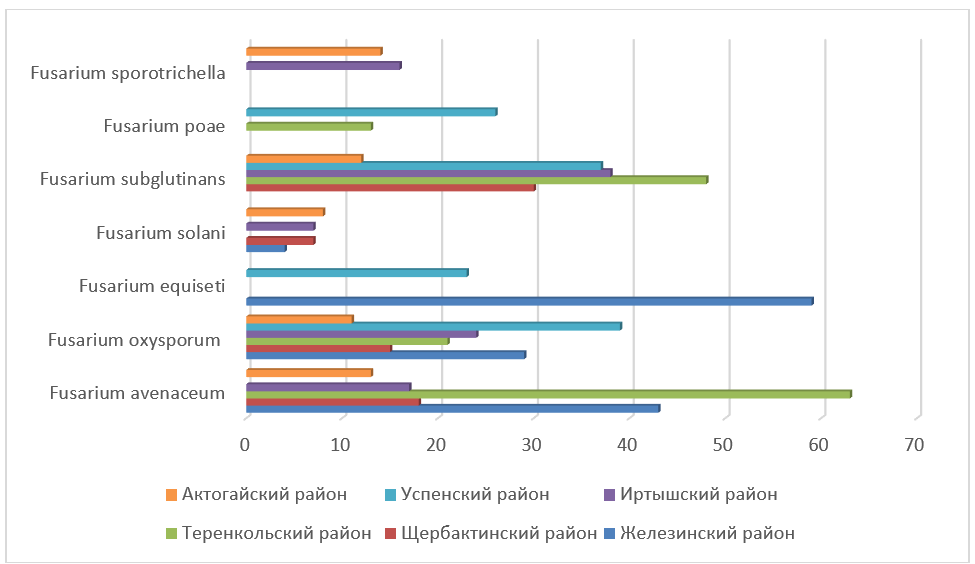
Figure 27 - Results of a quantitative assessment of Fusarium propagules
During the study, the predominant species of Fusarium in the examined soil samples were Fusarium oxysporum, Fusarium avenaceum, Fusarium solani, Fusarium subglutinans. Less common were Fusarium equiseti and Fusarium sporotrichella. The results obtained show that overall, the harmfulness threshold for population density of Fusarium fungi is not exceeded, except in individual cases. The quantity of Fusarium species propagules has significant indicators in the agrocenoses of Zhelezin and Shcherbakty districts. For these districts, it is recommended to create a healthy planting material fund, implement phytosanitary crop rotations, use resistant and tolerant wheat varieties to phytopathogens, carry out measures to stimulate moisture accumulation in the soil substrate and apply balanced NPK mineral fertilisers and seed treatment with systemic, contact, and biological agents.