
2 Hardware for hyperspectral imaging of agricultural crops
Hyperspectral systems are typically classified into three main categories based on their platform:
- satellite-based;
- aerial (including UAVs);
- ground-based.
In agricultural applications, ground-based and near-range aerial systems are most commonly used. These systems provide the high spatial and spectral resolution needed to diagnose plant diseases, monitor crop stress, and assess environmental impacts - core components of precision agriculture [9].
Among ground-based hyperspectral cameras used in agriculture, three models stand out: FS-13, FS-23, and FS-60.
The Figspec FS-13 is designed for detailed spectral imaging across the 400-1000 nm range, capturing both visible and near-infrared wavelengths. With a high spectral resolution of 2.5 nm and 1200 narrow bands, it delivers exceptionally fine wavelength discrimination. The camera’s spatial resolution - approximately 0.3 mm per pixel - enables close-up imaging of plant structures. Using line-scan technology, the FS-13 is particularly well adapted for laboratory work, including the identification of plant diseases and the generation of training datasets for machine learning applications [12] (Figure 4) [13].
The Figspec FS-23 also covers the 400-1000 nm range, though it operates with a 5 nm spectral resolution and approximately 120 spectral bands. Its compact form factor makes it ideal for mobile diagnostics in the field. This model is frequently used for on-site assessments and can also be mounted on stands for more controlled imaging of plant samples [14] (Figure 5) [15].
The Figspec FS-60 extends its coverage from 400 to 1700 nm, capturing a broader portion of the near-infrared spectrum. It offers 5 nm spectral resolution and supports up to 300 bands, making it suitable for advanced diagnostic tasks. The FS-60 is capable of detecting nutrient deficiencies, stress symptoms, and early signs of disease in crops. It is often integrated into UAV systems for wide-area monitoring [16] (Figure 6) [17].
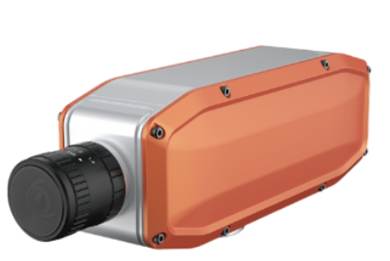
Figure 4 – FS-13 сamera [13]
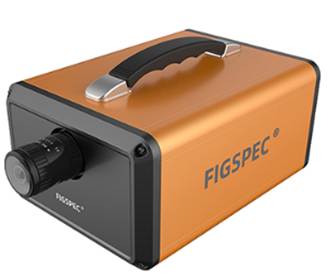
Figure 5 – FS-23 сamera [15]
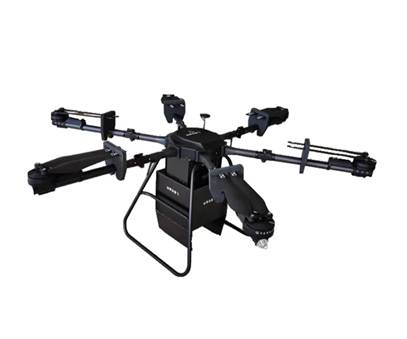
Figure 6 – FS-60 сamera mounted on a drone [17]
When choosing a hyperspectral camera, it’s essential to align the selection with the main research goals:
- FS-13 is primarily intended for laboratory-based studies;
- FS-23 is a compact, portable option ideal for quick, in-field diagnostics;
- FS-60 is suited for more advanced and comprehensive analyses [12, 14, 16].
Capturing images is only the first step in the overall workflow. The subsequent stage involves processing the hyperspectral data, which encompasses tasks such as calibration, normalisation, spectral feature extraction, and the development of classification models [18, 19]. These processes are commonly carried out using specialised software platforms like ENVI, HypPy [20], Specim IQ Studio [21], MATLAB with hyperspectral toolboxes [20], or QGIS with plugins designed for hyperspectral cube analysis [22].
For the purposes of this study guide, the Breeze platform by Prediktera is used for working with hyperspectral images. Breeze provides a user-friendly interface for visualising hyperspectral cubes, performing spectral analyses, creating machine learning models, and automating the detection of plant diseases and stress factors. Its seamless compatibility with Figspec cameras facilitates an efficient workflow from raw data acquisition to practical, actionable results.