
CHAPTER 4. PUBLIC POLICY DEVELOPMENT PROCESS POLICY
4.1 Stages and principles of public policy formation.
State policy is a set of measures aimed at achieving the socio-economic and political goals of the state. The process of its formation includes successive stages based on a number of principles that ensure the effectiveness and legitimacy of decisions made.
Identification of the problem and formation of state policy.
This stage is primarily associated with the identification of social, economic, social or political problems in civil society that require state intervention.
The main processes for determining current problems in society are:
- monitoring of the social and economic situation (analysis of statistical data, reports, forecasts);
- identification of key issues (conducting public opinion surveys, working with expert groups);
- shaping the political agenda (identifying priority areas based on public demand and strategic goals of the state);
- monitoring of mass media and public opinion (updating problems in the public space).
Key policy makers:
- state bodies (government, parliament, local administrations);
- civil society (NGOs, public organizations, initiative groups);
- experts and analytical centers;
- international organizations (if it is necessary to take into account international obligations).
Understanding the patterns and trends in the development of modern society is directly related to understanding the obstacles, difficulties and deviations in its functioning. Contradictions of social development are inevitable, and non-compliance with the social norms of functioning of society, groups and individuals lead to situations that directly or indirectly affect each person and require joint efforts to overcome them. Such situations can be referred to as «social problems of society» or «social problems».
In modern society, there are many different problems, including those of a social nature. From the point of view of the average person, personal problems complicate their own life and they can be fully or partially solved independently or seek help and advice from friends, colleagues, relatives or a professional.
Solving social problems is much more difficult. They relate not only to a single individual, but also to the entire society as a whole, in extreme cases to individual social groups[41].
The state policy is aimed at solving such problems. The word «problem» in Greek literally means an obstacle, difficulty, task. In the «New Philosophical Encyclopedia», a problem is defined as an objective question that arises in the course of the development of knowledge or an integral set of questions, the solution of which is of significant practical or theoretical interest[42].
Social problems or social problems are issues and situations that directly or indirectly affect a person and, from the point of view of a significant number of members of society, are quite serious problems that require collective efforts to overcome them[43].
Public issues can be divided according to the following criteria:
By source of origin.
- due to the internal characteristics of the individual or group;
- conditioned by the political, cultural and economic relations existing in the society;
- caused by random or natural phenomena, including natural and man-made disasters.
By coverage level:
- local ones that affect the life activity (or its individual aspects) of an individual or social group;
- institutional, which arise at the level of social institutions;
- systemic ones that require structural transformations of the social system as a whole;
- global – problems that affect the vital interests of all mankind and require coordinated international actions on the scale of the world community to solve them.
By level, nature, and scope of relations:
- political;
- economic;
- spiritual and moral;
- problems of the socio-cultural field;
- family and interpersonal issues.
- religious and confessional issues.
- professional, etc.
By time of existence:
- short-term ones.
- long-term ones.
- situational issues.
- the eternal ones.
Among the current problems of modern society, the following are distinguished:
- poverty, poverty of the population and inequality;
- alcoholism, drunkenness and drug addiction;
- loneliness.
- social orphanhood;
- the state of public health, the spread of HIV/AIDS;
- high mortality of the population;
- the problem of crime, etc.
As noted earlier, a state policy – public policy) is a set of goals, objectives, priorities, principles, strategic programs and planned activities that are developed and implemented by state authorities with the involvement of civil society institutions. This is a purposeful activity of state authorities to solve public problems, achieve and implement generally significant goals for the development of the entire society or its individual spheres. It is a means of enabling the State to achieve certain goals in a particular area, using legal, economic, administrative and other methods and means of influence, relying on the resources at its disposal.
The process of public policy development includes four main stages, representing a kind of «political cycle» consisting of several consecutive and logical actions. This process is shown in Figure 1.
First stage
definition of social problems and policy goals
Second stage
development and legitimization of public policy
Third stage
implementation and monitoring of public policy
Fourth stage
assessment and regulation of public policy
Figure 1 – The process of public policy development.
From the point of view of the mutual influence of public problems and actions of state authorities, the following chain of relationships can be distinguished: at the first stage, «problems of society – the state»; at the second stage, «state-political strategy»; at the third stage, «state-problem solving»; at the final stage, «analysis of problems – actions of the state».
Depending on who plays the leading role in setting goals and objectives, developing activities and programs, three models can be distinguished.
A top-down model, in which decisions are made at the highest levels of management, and then communicated to the lower levels and specific performers who play a passive role and act as simple performers.
The «bottom-up» model, in which policy-making begins with the lower structures of public administration, actively involves public groups and organizations involved in the development and implementation of various programs and projects. Based on their suggestions and taking into account their opinions, a holistic public policy is developed.
A «mixed» model, that combines the two approaches mentioned above, where there are mechanisms for involving citizens and civil servants in policy development with strong centralized management.
The system of state policy formation.
Public policy is developed taking into account a variety of circumstances and conditions by the highest state authorities with the participation of other policy actors such as parties, civil society associations, universities and research centers, influential figures in business, culture and science. The development of state policy is based on the basic interests of society, the strategic needs of the corresponding stage of state development, expressed by political leaders and elites in the form of basic principles and strategic goals that have found appropriate public support.
Public policy development is understood as a set of stages, factors (conditions), activities of policy subjects and groups of influence in the course of choosing strategic goals and fixing them in relevant documents (programs, statements, laws, doctrines).
Experts identify the following recommendations for developing an effective public policy[44] :
Looking ahead. The policy development process includes clearly defined outcomes that the policy is trying to achieve and, where possible, considers the future effects of the policy.
Broad view. The policy development process takes into account contextual and influential factors that are outside of Government jurisdiction and control.
Innovativeness, flexibility and creativity. The policy development process is innovative and flexible when it challenges established ways of solving problems and develops new and creative ideas. Where possible, the process is open to criticism and suggestions from others. Risks are identified and actively managed.
Basics of information. Advice and decisions in the policy development process are based on the best available information from various sources, and all relevant people are involved in the process at the earliest possible stage of goal formulation.
Engagement. The policy development process takes into account the impact and responds to the needs of all people who directly or indirectly influence the policy.
Unification. The policy development process includes a holistic view that goes beyond the institutional framework of government strategic goals, and is based on moral, ethical, and legal policy factors. Overlapping goals that are clear and the organizational structures necessary to ensure their implementation are taken into account first.
Control. Existing and already developed policies, as well as new policy initiatives, are subject to constant monitoring in order to ensure that they implement the most effective and changeable ones.
Rating. Systematic evaluation of policy effectiveness is built into the policy development process itself.
Learning lessons. The policy development process is based on the ways and processes of continuous study of policy implementation and formulation processes.
The political process itself in the development of public policy can be represented by the following main phases, shown in Figure 2.
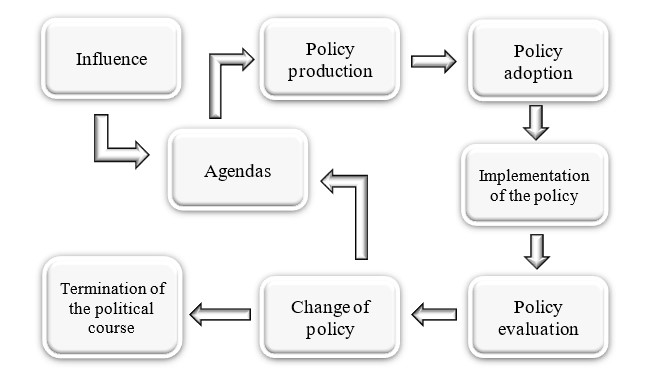
Figure 2 – The political cycle of public policy development.
State policy in various spheres of activity is implemented using appropriate resources: human, financial, informational, material, and others. For e-e implementation:
- regulatory documents that regulate rules, directives, plans, instructions, etc. are planned and developed.
- organize and control the activities of various internal and external structures;
- services are provided for certain groups of the population or organizations.
The feasibility of a public policy is determined by administrative, legal, and political factors.
[41] Verminenko, Yu. V. The Transformation of the Significance of Social Problems in the Public Consciousness of Contemporary Russian Society / Yu. V. Verminenko // Vestnik of Saint Petersburg University. Series 12: Psychology. Sociology. Pedagogy. – 2008. – No. 3. – P. 312.
[42] New Philosophical Encyclopedia / Editorial board: V. S. Stepin, A. A. Guseinov, G. Yu. Semigin, A. P. Ogurtsov. – Moscow, 2010. – Vols. 1–4. – P. 1915.
[43] Social Problem // The Oxford Dictionary of Psychology / Ed. A. Reber. – 2002.
[44] Morrison, T. Actionable Learning. A Handbook for Capacity Building Through Case Based Learning. – Tokyo : Asian Development Bank Institute. – 2002. – С. 205–206.